

Building made easy: Discover innovative solutions and tools for barrier-free thresholds on balconies and terraces—developed in collaboration with leading companies in the construction industry: Triflex, Schöck, ACO, Siegenia, Solarlux, and Profine.
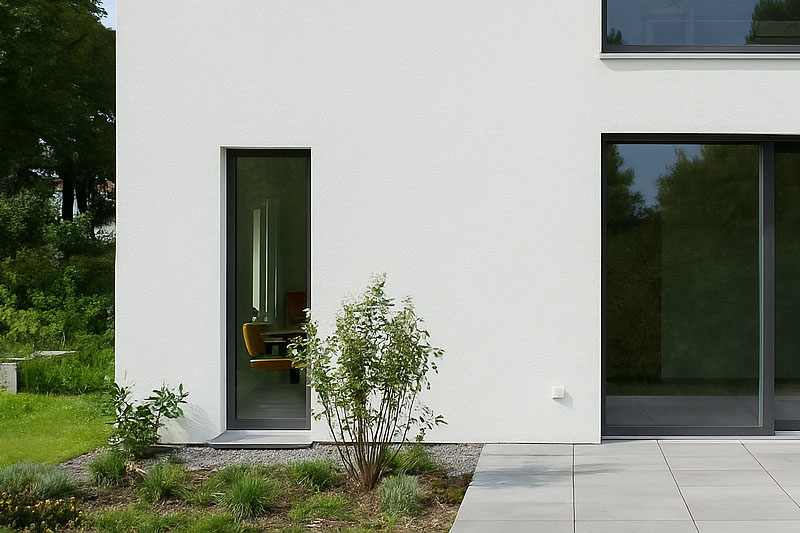
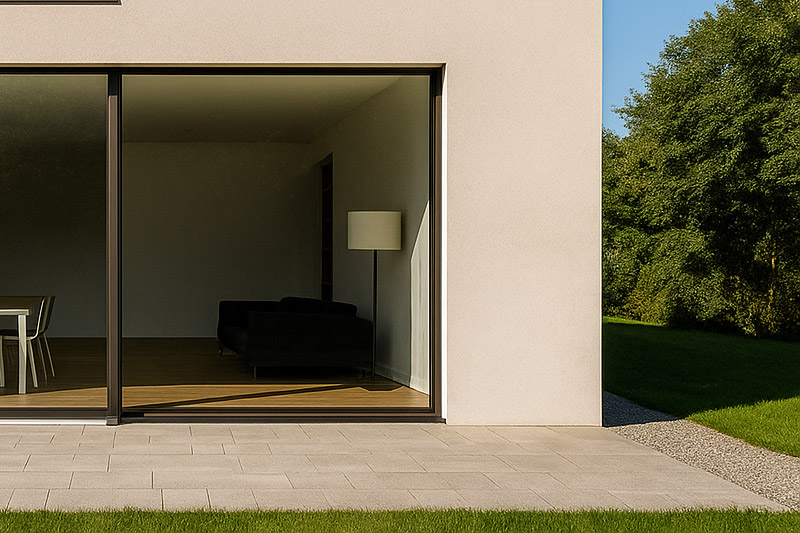
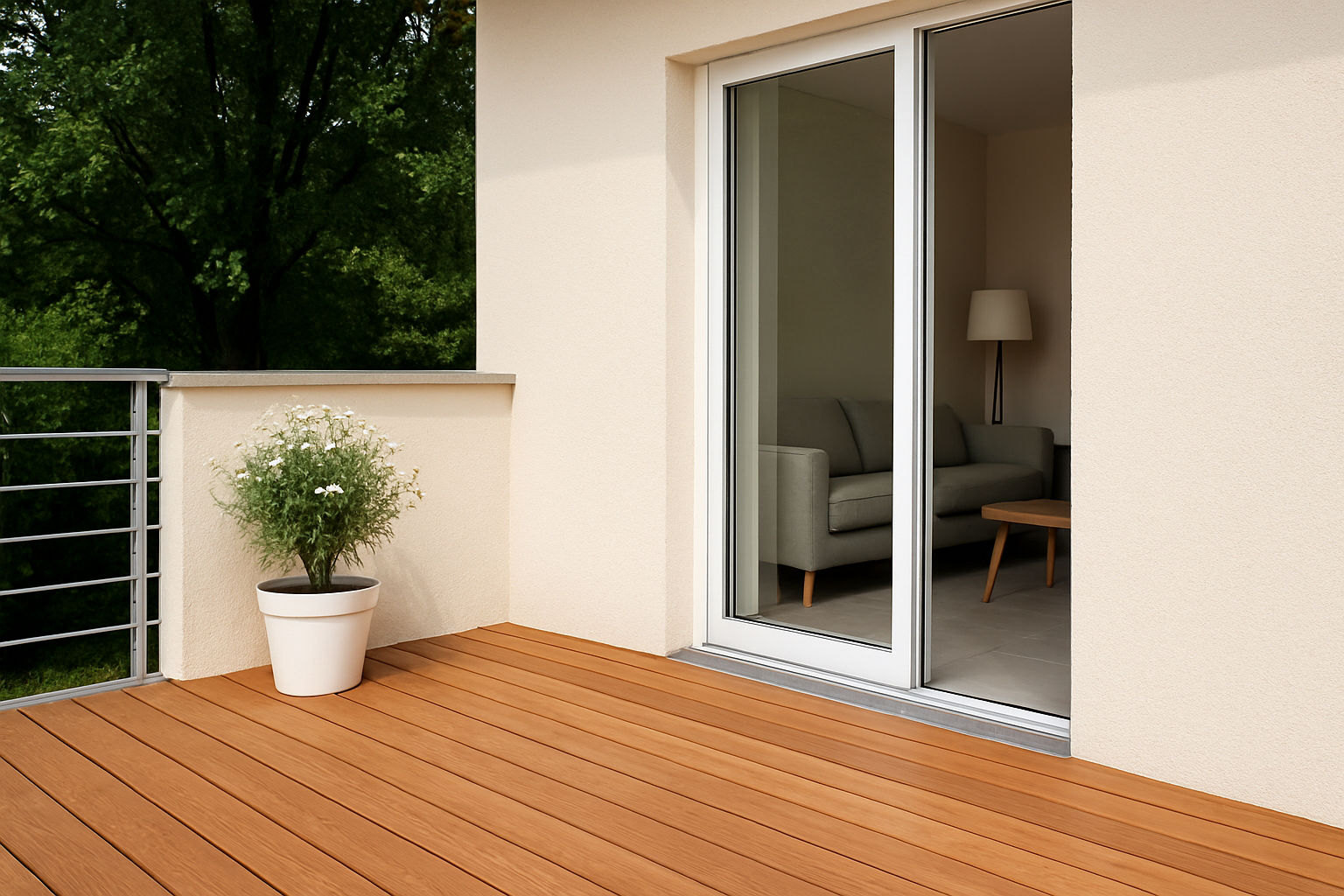
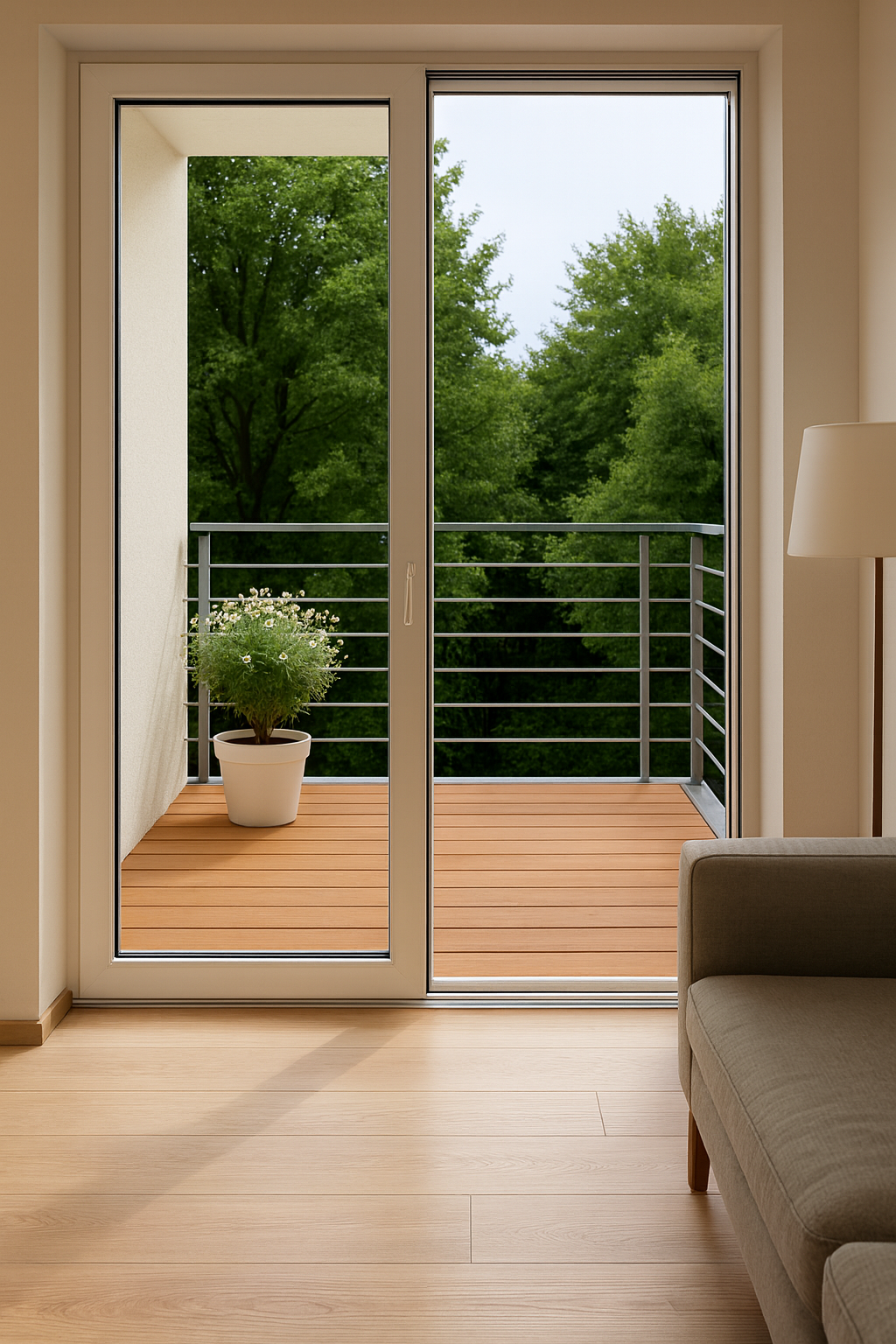
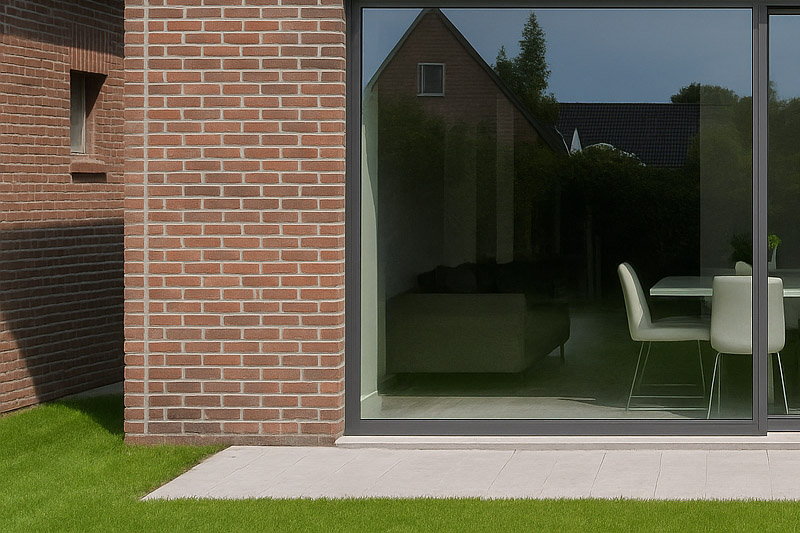
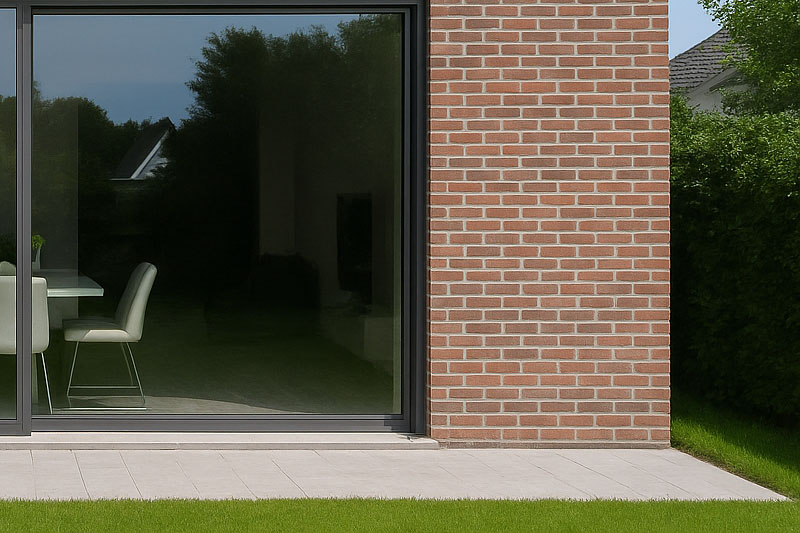
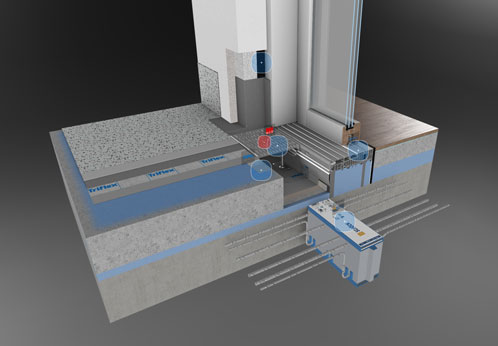
Planning assistant for a monolithic masonry scenario with a lift-and-slide door element from SIEGENIA.

Planning assistant for a monolithic masonry scenario with a folding element by Solarlux.
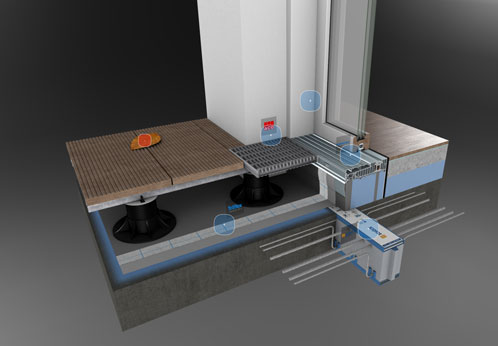
Planning assistant for an external thermal insulation composite system (ETICS) installation scenario with a lift-and-slide door element from SIEGENIA.

Planning assistant for an ETICS installation scenario with a folding element by Solarlux.
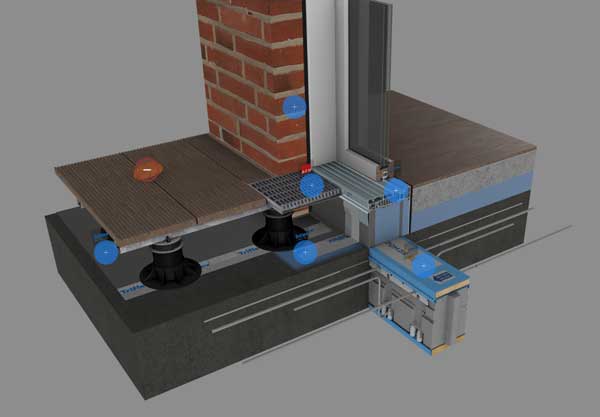
Planning assistant for a cavity wall masonry installation scenario with a lift-and-slide door element from SIEGENIA.

With the Window Connection Planning Assistant, Triflex, Schöck, ACO, Siegenia, Solarlux, and Profine have created an innovative tool that simplifies the planning and visualization of barrier-free thresholds for architects and installers.

The ift test according to guideline MO-01/1 ensures reliable adhesion, compatibility, and watertightness of building connections under realistic load conditions and thus forms the basis for safe and durable component solutions.

The Window Connection Planning Assistant for barrier-free thresholds is a joint project by Triflex, Schöck, ACO, Siegenia, Solarlux, and Profine. These leading companies in waterproofing, drainage, window and door technology, and thermal insulation contribute to the energy efficiency, sustainability, and functionality of modern construction projects with their innovative solutions.
Here in the Planning Assistant we have chosen reinforced concrete as the most common application. In addition, there are connections for steel to reinforced concrete as well as for pure steel construction. Timber construction/modular timber construction is also an area of application.
The primary application is indeed new construction. However, there are many realized projects where old balconies were removed and new ones reattached—thermally separated. This works via bonding (Isokorb type RT). Another application area is buildings that previously had no balconies. There are a number of solutions for these (Isokorb T type S).
This is indispensable in Germany. There are national approvals by the DIBt in Berlin, European approvals (ETAs), as well as construction type approvals.
In addition, there are many further verifications: from structural analysis and building physics to sustainability (EPDs).
The Isokorb is a “load-bearing thermal insulation element.” The two most important requirements are the optimal balance between “load-bearing and insulating”—using as little material as possible with the lowest lambda values. In addition, stresses must be absorbed and safely transferred throughout the entire service life (temperature), durability must be ensured, and the following requirements must be considered: loads, sound insulation, fire protection, moisture protection, earthquakes, vibration, horizontal loads (e.g., wind), and accessibility.
Three cases are distinguished. In case 1, the passage height is at least 0.15 m. The building waterproofing runs beneath the element; the floor threshold has no influence on the waterproofing. Case 2 describes an element that intrudes into the 0.15 m waterproofing height. The connection height of the construction joint is reduced to 0.05 m. Standards specify additional measures for this, e.g., a drainage channel. Case 3 involves elements with a barrier-free threshold of <= 0.02 m. Their waterproofing is complex and depends on both the threshold construction and the overall building situation. Therefore, it is considered a special waterproofing construction requiring a project-specific design approach that must be planned for the respective building project.
There are indeed regulations mandating barrier-free passages. However, they do not regulate their waterproofing. For that, one must refer to DIN 18531 (balconies) or DIN 18533 (in contact with soil). The recognized “Flat Roof Guideline” (Fachregel für Abdichtungen, Flachdachrichtlinie) also provides helpful guidance, as does the RAL installation guide for windows and front doors from the window construction perspective.
Barrier-free thresholds (<= 0.02 m) are, according to the standards, a planning task. The building element, waterproofing, and drainage must be planned together in advance (waterproofing contractor, window fabricator, drainage specialist, planner) to avoid errors (e.g., that an installed element cannot be properly waterproofed or that a contractor waterproofs incorrectly due to a lack of knowledge of the complex barrier-free threshold). All adjacent trades must also be included.
The ift guideline provides a rigorous test that assesses fully installed and waterproofed building elements with barrier-free thresholds for resistance to driving rain and ponding water. The test certificate gives planners the assurance of a functioning complete system that standards alone cannot provide and also saves considerable coordination work between trades.
In principle, the slope runs towards the surface
(per DIN 18531-5 min. 1.5%).
Min. 15 cm grate width (recommendation: 20 cm / always 20 cm in snow load zone 3)
Use mesh grates or transverse/longitudinal bar grates (min. 50% open area).
The waterproofing is a liquid-applied system offered based on PMMA (polymethyl methacrylate) and PU (polyurethane). Triflex ProDetail is PMMA-based, a two-component waterproofing system that cures chemically. Triflex SmartTec, by contrast, is polyurethane-based and cures with ambient or substrate moisture.
The following must be observed:
The solutions shown do not correspond to the “recognized rules of technology” but to the current state of the art. The recognized rules, such as DIN 18531, do not fully regulate waterproofing connections in the threshold area. Therefore, these are tested and certified special solutions.
It must be verified that sufficient adhesion can be achieved to the substrate to be waterproofed. Chemical compatibility between materials must also be ensured. This can be checked via an on-site pull-off test or clarified as part of technical consultation. We maintain an internal database for reference.
Depending on the substrate, it must be cleaned, abraded, and primed. The required substrate preparation is specified in the Triflex application manual.
Yes, but individual planning is required. All requirements arising from other installation situations must be taken into account. This applies in principle to all solutions.
Yes, all solutions are provided with ift documentation and an ift test report according to guideline MO 01-1. Ponding water and driving rain tightness were tested in new condition and after loading.
The cross-trade approach ensures that all systems (materials) are coordinated with each other. These solutions were developed collaboratively with the expertise and know-how of all parties involved. The advantage for you: you no longer need to select from individual components or systems.
Designing and installing barrier-free window and door thresholds that are both functional and compliant with standards and best practices often presents major challenges for planners, architects, and installers. The Window Connection Planning Assistant opens new possibilities by offering cross-trade interface solutions that are not only planned but also visualized in detail. Numerous resources such as product information, specification texts, and CAD files are available for download. All solutions are certified by ift Rosenheim, providing a high degree of reliability.
The Window Connection Planning Assistant for barrier-free thresholds is a joint solution by Triflex, Schöck, ACO, Siegenia, Solarlux, and Profine. It was born from the idea of providing planners, architects, and installers with support in designing and installing safe, professionally executed barrier-free window and door thresholds. The assistant enables planning, visualization, and understanding of cross-trade interface solutions certified by ift Rosenheim.
Each depicted installation situation and variant requires a high degree of technical coordination and is visualized in detail. In addition, all solutions are tested by ift Rosenheim. We have high quality standards and aim to always present the best possible solution. We will therefore expand the range of variants step by step with the greatest care and consistent quality. You can look forward to more variants.
 Übersicht
 Planungshelfer
 Relevante Informationen
 FAQ
FAQ Kontakt